

I have a confession.
I like New Year’s Eve better than I like Christmas.
Starting over.
Clean slate.
Fresh beginnings.
Resolutions for the road ahead.

In my opinion, this was the best satirical meme on social media over NYE because it highlighted our love-hate relationship with resolutions.
How often have you been burned by New Year’s resolutions?
Are you frustrated by lack of results when others seem to achieve their goals?
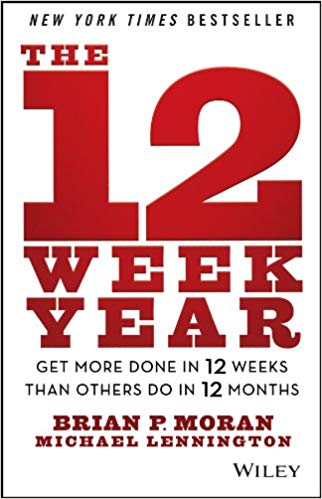
I cannot encourage you enough to read Moran and Lennington’s “The 12 Week Year”.
When the New Year stretches out in front of you, a goal can easily be accomplished “someday” in the next 365. Tomorrow, next week, or next month are always great times to start something, aren’t they?
What if you hyper concentrated just on the next 12 weeks?
84 days vs. 365?
What if you focused on smaller, attainable goals instead of only big visions?
I first learned of this book from the well produced Asian Efficiency podcast. Their coverage had me intrigued – I started implementing it the day I heard the overview – but the magic really started happening after I got my hands on a copy of the book.
Having been an ardent fan of David Allan and the methodology of “Getting Things Done” for years, the concept of creating a life purpose that trickled into goals to be achieved through projects was already cemented in my mind. However, the concept of a 12 week focus period has been exceptionally helpful for me; having every task, project, and goal written down in front of you can be monumentally overwhelming without a start and stop point. Planning and living my life one quarter at a time has been a critical part of any success for me.
The benefits to reading this book include the following:
- Developing a long term vision for your life
- Creating measurable goals to get there
- Focusing on the next 12 weeks vs. the vast expanse of the entire coming year
- Sustainably planning your time: weekly, daily, hourly
- Recognizing how our brains secretly fear change
- Identifing yourself at a point of despair or discouragement during change
- Practicing mental and emotional honesty with yourself and others
When you have the wrong outlook, change is painful & can feel downright masochistic.
(i.e. “I want to be thin and fit in the new year. I’m going to get up at 5 AM and go to the gym before work every day this year. I won’t eat any junk food, and I’ll limit myself to 1,800 calories a day.”)
This sounds awful.
Note that it goes on for infinity; there is no room for negotiations or check points.
This implies we will reach success at some unknown point in the future; we are unable to be successful TODAY because our goal is a distant dot on the map. There is no room for instant gratification.
What is “thin and fit” anyway? There is a distinct lack of measurable goals here. Is it a certain weight? Is it being able to bench press a certain load? Is it being fit enough to run a marathon?
What are you going to do when you get discouraged? (And you will.)
Compare that to the following:
- “I want to work towards becoming a thinner, fitter person; I want to eat healthier.” (A broad, long term vision that you can start to live from the first day you implement it. You can have success today in this moment with this self-contract.)
- “I’ll complete twenty minutes of cardio three times a week for the next three months (36 visits). I’ll grocery shop and meal plan weekly as well.” (12 week goals that involve key actions)
- “Eating out takes up a lot of my free time and is a huge source of excess calories for me. I want to cut that for the next 12 weeks and see how it goes.” (Controlling the processes that contribute to your success. Identifying road blocks and giving yourself the freedom to renegotiate your plan of success in the future.)
- “My friends may not appreciate my refusal to eat out with them at our usual unhealthy restaurants. I’ll communicate my goals; I would like to invite them over for a healthy homemade meal, suggest a healthier restaurant, or do an activity that’s less food dependent. If I agree to go out with them to our typical hang outs, I’m just going to eat the same old stuff. If I don’t go out with them, I will feel out of touch and depressed.” (Emotional and mental honesty.)
- “I’m going to create appropriate time blocks on my calendar to complete these goals and prepare for the unexpected. I have time for strategic work, buffer zones, and break out blocks.” (The book is blessedly realistic in how to plan a calendar and NOT feel the dread of always being in the wrong place at the wrong time.)
- “I don’t FEEL like going to the gym today, but I made a promise to myself and I’m going to follow through.” (Acting on commitments, not feelings, and owning your goals. *Commitments* of 12 weeks are much easier to sustain and fulfill than commitment of 52 weeks. )
- “To encourage myself during times of despair, I am going to promise myself a new Audible book for every 6 visits to the gym.” (Recognizing that change doesn’t come without discouragement; identify yourself during despair and have a plan to keep going.)
- “During the weekly review of my goals, I realized the gym equipment I typically use is in high demand at the times that I go. I am going to change my routine and visit earlier or later in the day and switch up the equipment I use. Next week, I’ll be able to know which was more effective towards getting my cardio in efficiently. ” (Controlling the process and rethinking your plan in light of reaching your goals.)
- “I completed my 12 week goal! I am now sitting down to re-assess my life. Is my vision still the same? Was I successful in reaching my goals? What went wrong? What went right? How do I want to change and grow in the next 12 week year?”
The most common New Year’s resolutions involve fitness and weight-loss so I used that as my example, but you may have vastly different aspirations for 2020. The same principles apply, but – keep in mind- my summation is a poor shadow of what the book can teach you.
Logistically, it’s a quick read (the paperback version has workbook space but a cheap notebook will do just fine) and any version is not expensive (~$12 or less). As with any self-help or time management book I have ever read, I didn’t implement everything in this book the first time that I read it. I really appreciate that every time I have gone through this book, I take away another piece of the puzzle that helps me get things done more efficiently and effectively.
If you’re serious about getting right with your life goals, you can purchase the book here:
For future reference, the Asian Efficiency podcast has some great resources for implementing “The 12 Week Year”. Feel free to check out the following:
- The 7-Step Process to Make Achieving Your Goals Inevitable
- 5 Common Mistakes That Cause The 12 Week Year to Fail
- How to Take Massive Action on Your Goals by Implementing the 12 Week Year Effectively
The author’s original webpage – The 12 Week Year
So what are three goals you want to tackle in the first three months of 2020?
*When purchased through the Amazon Affiliate link embedded in this blog post, a small percentage of sales – at no additional cost to you – is paid to the author of this article.
 Green Door Farm