“I’m too old to give you a kidney.”
This is my mother’s response to the news that I am now foraging wild mushrooms out of the Northern MN backwoods.
Truth be told, I myself was trepidatious on those first few hunts. Armed with multiple books and a lot of Googled pictures, I’d find what I was sure were edible mushrooms.
And then my nerves would kick in before toxicity concerns flashed to mind; I’d simply take a picture and leave the [probably] edible and delicate mushroom quietly undisturbed.
It wasn’t until I discovered three things that my mushroom foraging actually took off past the point of ingestion.
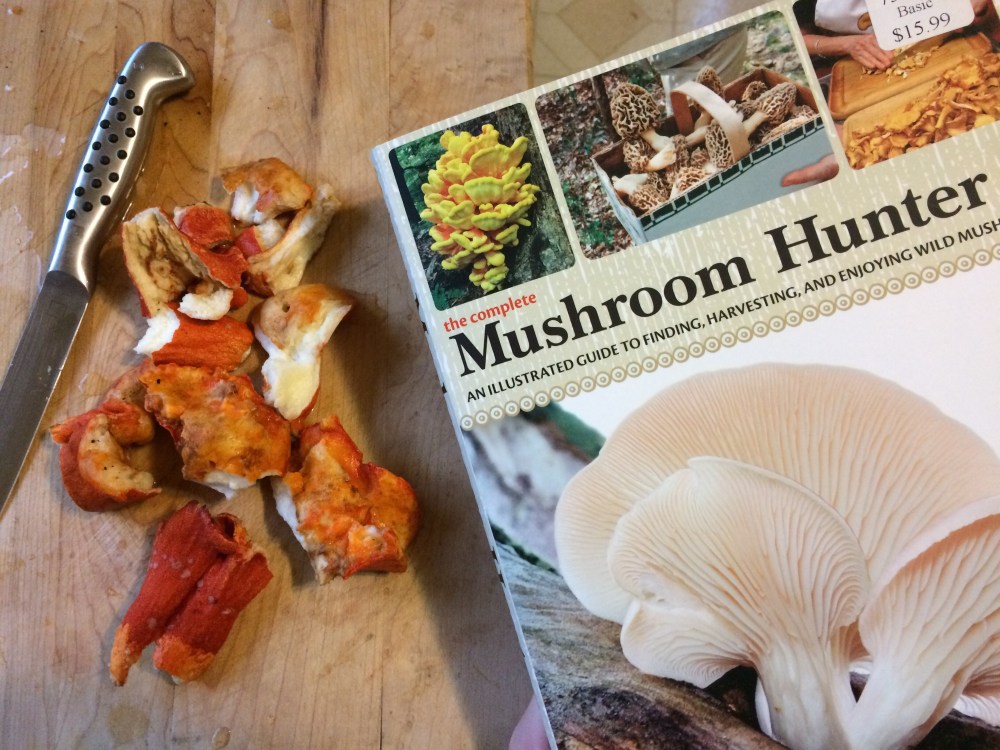
The first was Gary Lincoff’s Mushroom Hunter. Better than any other foraging book that I had previously encountered, I paged through it daily until the photos became familiar.
The second was a positive identification.
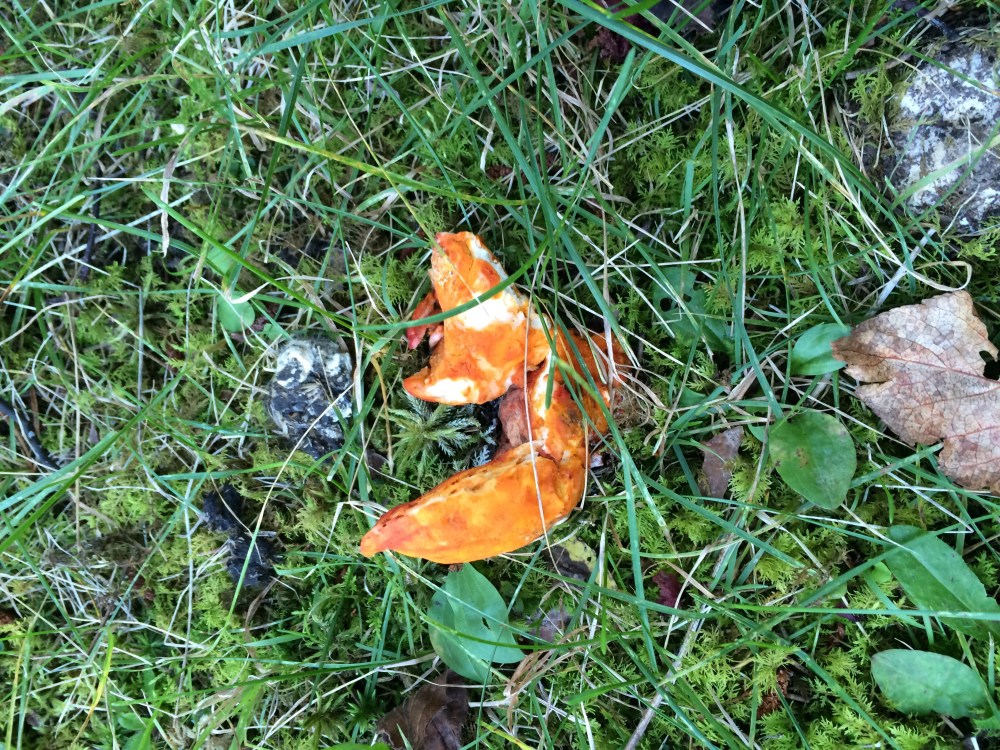
Fast forward to a warm September day, when I step on something hard and crunchy in the lawn underneath a stand of pine trees.
I make my first definitive identification of an edible fungis…by stepping on and obliterating it.
Why definitive?
Unless your neighbor is spray painting mushrooms, it’s hard to not identify lobster mushrooms correctly.
They are bright red to orange, mis-shapen, and occasionally crushed by a flip flop.
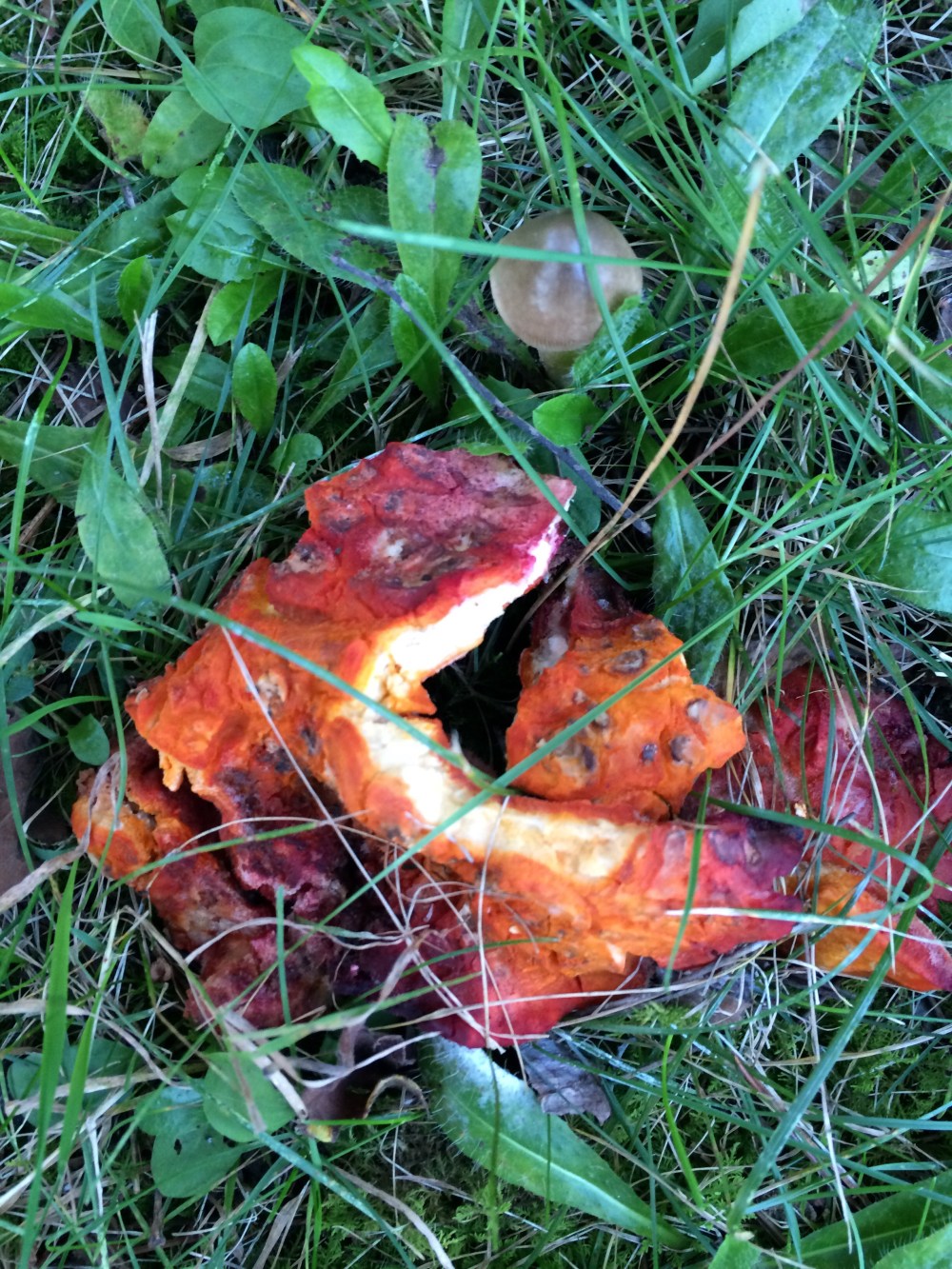
I investigate the surrounding woods and find dozens of them just past the brush line. Finding a regular, local source is my third impetus.
The damp of the fall forest has ruined some of the specimens. (I have since found that a wet fall will degrade them quickly. Like this once beautiful specimen turning mealy with age and rain.)
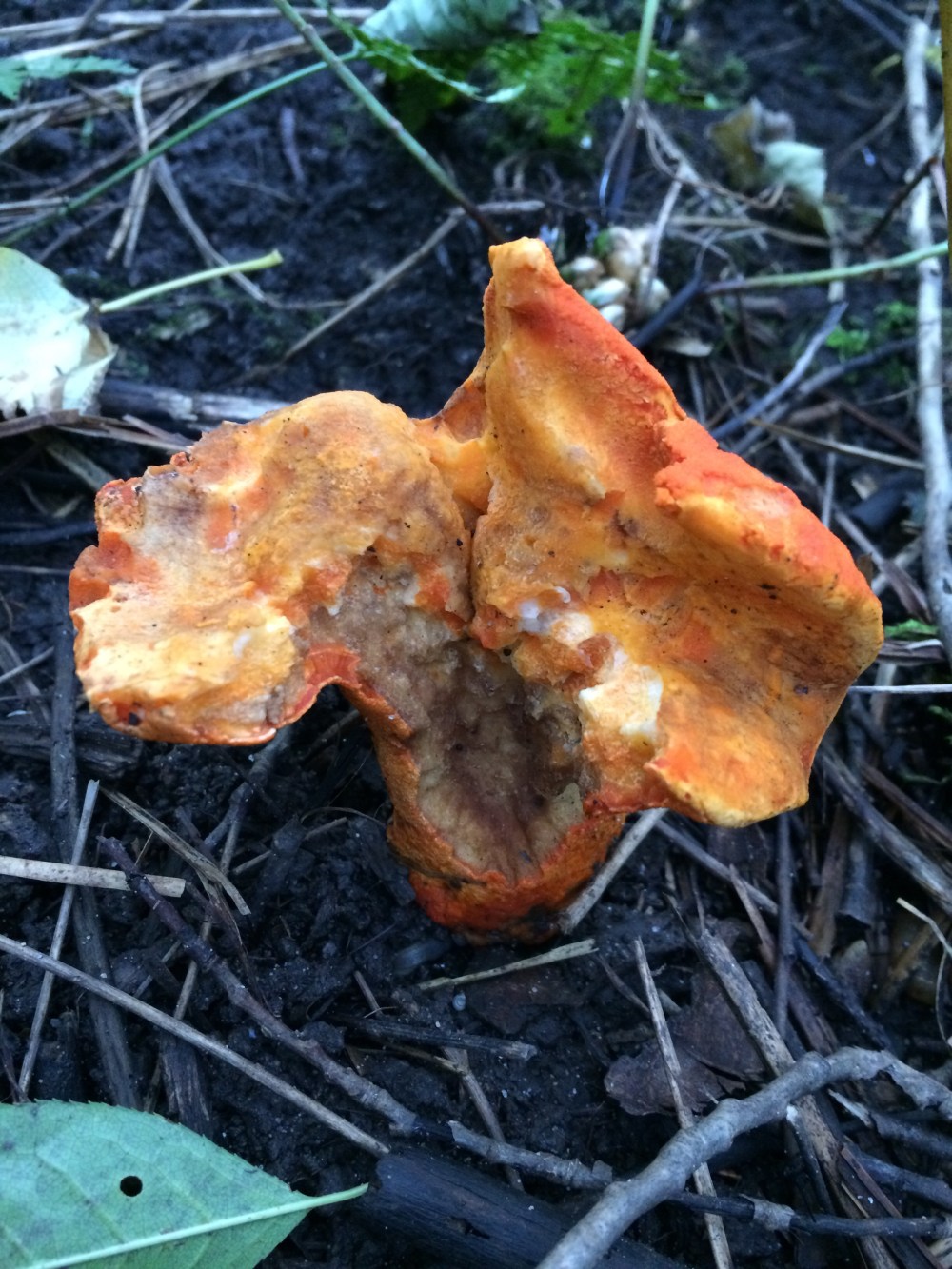
After checking two identification sources just to be sure, I pick the best specimens I can find and head to the kitchen.
I feel confident as I clean and pare the mushrooms down to the choice bits.
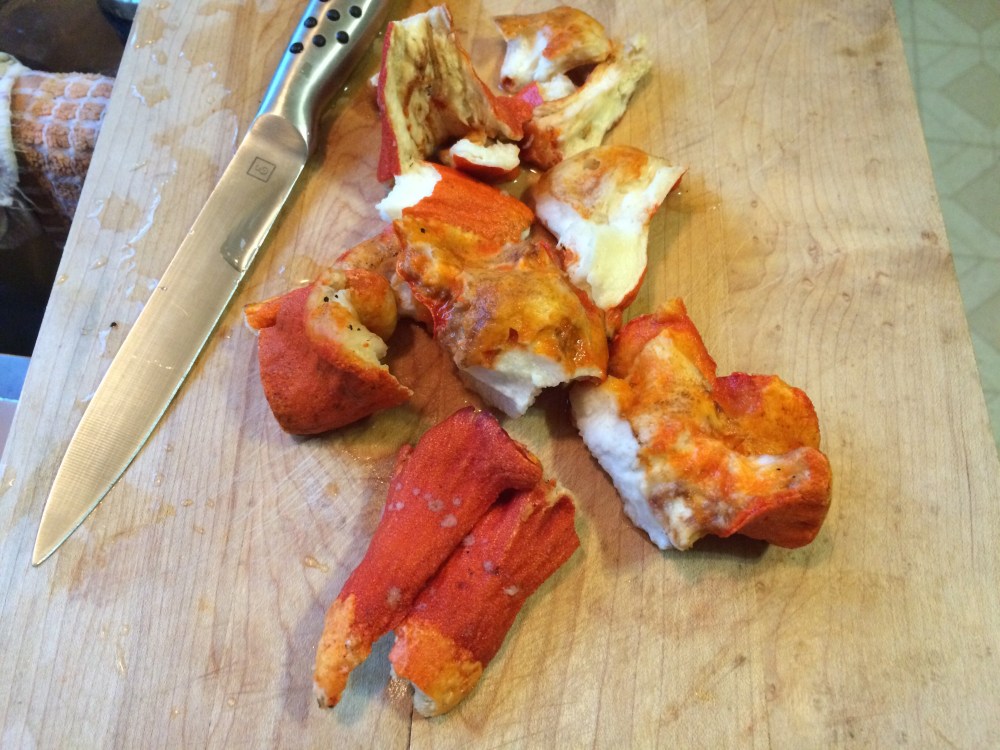
Why confident?
Like Lincoff and other sources will tell you, lobster mushrooms (Hypomeces lactifluorum) are really either Russulas or Lactarius mushrooms that have been attacked by a parasitic ascomycete mold.
So, literally, a fungi attacking a fungi.
What results is a crunchy, edible mold with flavor not unlike actual lobster with enough red and white coloring to even look like the real seafood.
There’s nothing else that looks like it; and it’s quite edible.
What was there to do but make lobster mac’n’cheese?
And survive…without dialysis or a mother’s kidney.

 Green Door Farm